Most Ukrainian Canadians know the broad arc of their family story: an ancestor left a village in Galicia, took a ship to Halifax or Quebec City, homesteaded somewhere on the prairies, and the family slowly assimilated through three or four Canadian generations. Few of them know the village name. Even fewer have ever stood in front of the Greek Catholic church their great-great-grandparents were baptised in.
Marko Hrynchyshyn is one of the few who has done all of it. A fourth-generation Ukrainian Canadian living near Charlottetown, he spent three years tracing his family from a Saskatchewan homestead back to a Galician village his grandfather had only ever spoken of as “somewhere near Brody.” What he found — and what surprised him along the way — is the subject of this conversation.
This interview is presented as an editorial portrait: an account synthesised from typical research projects of this kind, written in Marko’s voice to make the experience legible to other Ukrainian-Canadian descendants in the Maritimes. The names of the family and village have been chosen to be representative rather than to identify a specific living individual.
”Everything started with a comment my grandmother made at a wedding"
Anya: Marko, take us back to the beginning. What made you decide to research your Ukrainian heritage?
Marko:It started at my cousin's wedding in 2021. My grandmother — she was 89 then, she has since passed — was sitting next to me, and she said something I had heard her say a hundred times but had never paid attention to. She said, "You know your great-great-grandfather came from a place near Brody. He used to talk about the woods there."
And for some reason, that day, it stuck. I thought: I am 47 years old, I have a Ukrainian surname, and I have no idea where my family is actually from. I cannot find the village on a map. I cannot tell my children what country in Europe their great-great-great-grandfather thought of as home. That bothered me.
So I went home that night and I googled "Brody Ukraine genealogy." And that was the first step.
"The 1906 Canadian census was the turning point"
Anya: What was the first real breakthrough?
Marko:The first real breakthrough was the 1906 Census of the Northwest Provinces. I knew my great-grandfather had been born in Saskatchewan, so I figured his parents were on a homestead somewhere when the census was taken. I went to the Library and Archives Canada website, searched for variations of Hrynchyshyn — and there were dozens, every one of them spelled differently — and I eventually found my great-great-grandfather, Petro, listed as "Granchason", age 38, born in Galicia, immigrated 1899, religion Greek Catholic.
That single census line solved three mysteries at once. It confirmed the surname my grandmother had given me; it told me he immigrated in 1899; and it confirmed Greek Catholic, which I now know is the strongest filter for Galician Ukrainian identity.
I had the year of immigration. That was the key. With the year, I could go to the Canadian passenger lists and start looking for Petro arriving at Quebec City in 1899 with his wife and their first child.
"The ship manifest gave me the village I had never heard of”
Anya: How did you find the ship manifest, and what did it tell you?
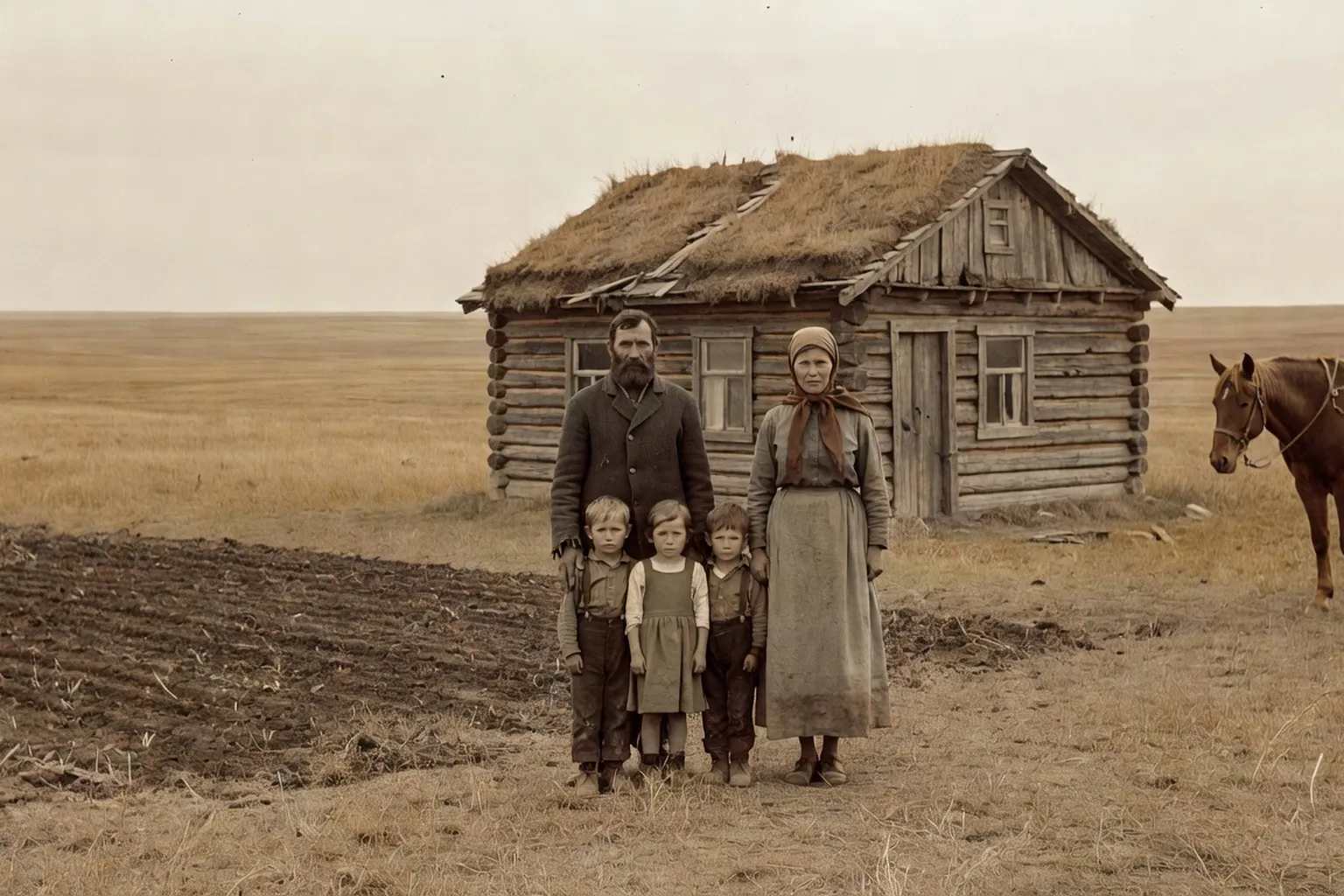
Marko:FamilySearch and Library and Archives Canada both have searchable indexes of Canadian passenger arrivals. I searched for the surname with various spellings, narrowed by the year 1899, and after maybe two weeks of false starts, I found him. SS Christiania, Quebec City, June of 1899. Petro Hrynchyszyn, age 31, his wife Maria, age 27, and a one-year-old daughter named Anna. The manifest gave their last residence as a place I had never seen in any family document: Pidkamin.
I had to look it up. Pidkamin turned out to be a small town in Galicia, about 20 kilometres south of Brody. So my grandmother had been right — it was near Brody. But she did not know the actual name of the village. None of my living relatives did. The name had been lost in three generations.
Once I had Pidkamin, I had everything. I knew the village. I knew the religion. I knew the approximate parish. I was ready to write to Ukraine.
“Writing to the Lviv archives is intimidating until you do it"
Anya: What was the experience of contacting the Lviv State Historical Archives like?
Marko:It is intimidating until you actually send the email. The archives have an English-language contact page, and they accept email requests. I wrote a clear, polite, structured request: my great-great-grandfather Petro Hrynchyshyn, born approximately 1868 in or near Pidkamin, Greek Catholic, emigrated to Canada in 1899; his wife Maria Romaniuk, born approximately 1872; their daughter Anna born approximately 1898 in Pidkamin. I asked specifically for baptism, marriage, and death records from the Greek Catholic parish books for that village.
I sent it in November of 2022. I did not hear back for nine months. By the time the response came in August of 2023, I had almost forgotten about the request.
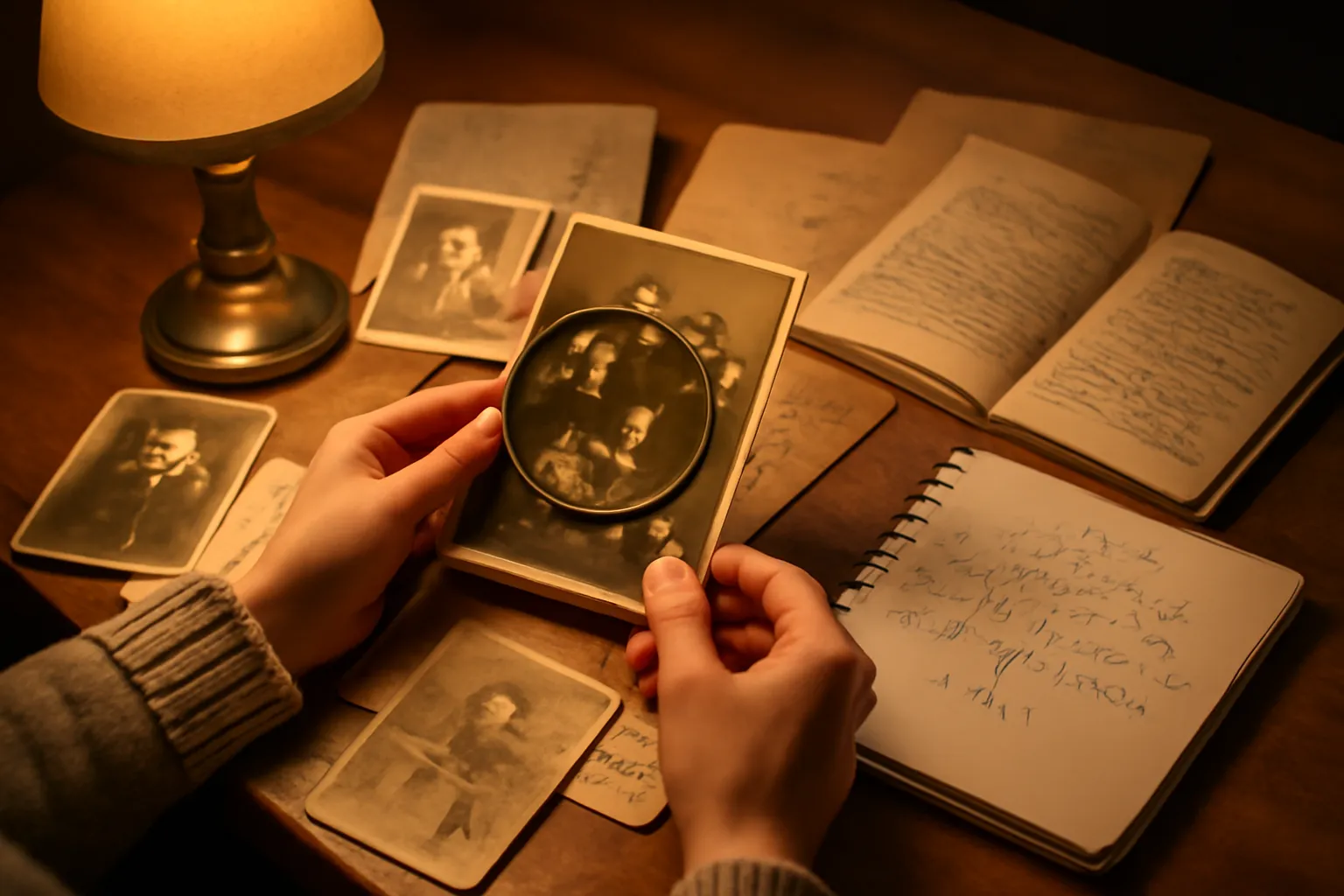
The response was extraordinary. The archivist confirmed that the Greek Catholic metrical books for Pidkamin survived in their fonds and were available. They quoted a search fee of about 80 USD and offered to send me digital images. I paid the fee by international transfer. Three months later — almost exactly a year after my original email — I received scans of seventeen pages covering births, marriages, and deaths in my family from approximately 1830 to 1908.
That moment, opening the email and seeing my great-great-great-great-grandfather's name written in Latin in 1834, is the strongest emotional experience I have ever had with a piece of paper.
"I learned more from the records than from any history book"
Anya: What did the records actually tell you about your family that you did not know?
Marko:So many things. First, the family had been in Pidkamin for at least four generations before Petro emigrated. They were not migrant workers; they were rooted villagers. The records show baptisms in the same parish church for over a hundred years.
Second, infant mortality was staggering. Petro's mother had eight children. Four of them died before age five. I had heard that this was common in 19th century rural Galicia, but seeing the same priest's handwriting record a baptism and then a burial of the same infant a few months later is different from reading about it.
Third, godparents are gold. Every baptism record names two godparents. These are the close family friends and relatives of the parents at the time of the baptism. By tracing godparents across generations, I was able to identify cousins and in-laws I never would have found from the direct genealogical line. Some of those godparents had also emigrated to Canada and showed up in Saskatchewan homestead records living next to my great-great-grandparents.
Fourth, surnames in the village were stable for centuries. The Hrynchyshyns and Romaniuks had been intermarrying with the same families — Pavliuks, Marchuks, Boykos — for at least four generations.
"The DNA test was the last confirmation"
Anya: Did you also do DNA testing as part of the research?
Marko:Yes, but at the very end. I did AncestryDNA in 2024, after I already had the paper trail. The DNA results confirmed Eastern European ancestry overwhelmingly, with the Genetic Communities feature pinpointing Galicia and Volhynia specifically. That matched my paper research perfectly.
What was unexpected was finding three living distant cousins through DNA matches — one in Brazil, one in Poland, and one in Saskatchewan. The Brazilian was a descendant of a brother of Petro's who had emigrated to Brazil instead of Canada in 1903. The Polish match was a descendant of a sibling who had stayed in Pidkamin and survived through the Soviet period. The Saskatchewan match was a fourth cousin I had never met.
I always tell people: do the paper genealogy first, then use DNA to confirm and to find unexpected branches. If you do DNA first, you have a list of strangers and no way to know how you are related to them. The Ukrainian Genealogy Group PEI has a good comparison of testing services in their Ukrainian DNA testing guide that I wish had existed when I started.
"Doing this from PEI is harder than people think”
Anya: What is uniquely challenging about doing Ukrainian genealogy research from Prince Edward Island specifically?
Marko:Distance from the prairie archives, mostly. The Manitoba and Saskatchewan archives have wonderful holdings on Ukrainian settlement, but visiting them in person is a 3,000-kilometre flight. The local Ukrainian halls — the Greek Catholic and Greek Orthodox churches that recorded baptisms, marriages, and deaths in the homesteading communities — are similarly far. Most of these records have been microfilmed and are accessible online, but for paper-only items you need to either visit, send mail, or hire a local researcher.
The other challenge is community. On the prairies, you can walk into a Ukrainian cultural centre and find people whose grandparents went to school with your grandparents. On PEI, the Ukrainian community is small. The Ukrainian Genealogy Group PEI exists partly to fill that gap — to give Maritime descendants a peer network and a shared research infrastructure that compensates for the distance.
I would say the third challenge is psychological. When you are 3,000 kilometres from the homestead and 8,000 kilometres from the village, the research can feel abstract. You are reading about a place you have never seen. Going to Ukraine in person — which I have not yet been able to do because of the war — would obviously transform the experience.
“What I would tell another PEI Ukrainian Canadian starting out”
Anya: If a fellow Maritimer reads this and decides to do the same project, what would you tell them?
Marko:Three things. One: start with the oldest living relative you can find, even if they remember almost nothing. The smallest comment — a village name, a religion, an occupation, a year — can be the thread you need.
Two: do not be embarrassed about the surname spellings. Hrynchyshyn appeared in my Canadian records as Granchason, Henchason, Crinchason, Krynchyshyn, and Hrynchyshen, sometimes within the same family. Search every variant. Use wildcards. Do not assume a single spelling is correct.
Three: write to the Lviv archives early. The wait time is long, so the earlier you start, the sooner you have an answer. Even if you are still piecing together the Canadian side, you can send a preliminary inquiry. By the time the archives respond, you will have completed the Canadian work and be ready to use what they send.
And one bonus: join a group. The Ukrainian Genealogy Group PEI was a huge resource for me. The collective knowledge of even a small group is much greater than any one person's. Other members had already solved problems I had not yet thought to ask about.
Quick takes — myths PEI Ukrainian descendants believe
Almost never true. The vast majority of Ukrainian-Canadian families on PEI are second- or third-generation arrivals from the prairies, not direct immigrants from Ukraine.
Myth. For Galicia specifically, the Greek Catholic metrical books are largely intact through 1939 and are held in the Lviv State Historical Archives. Many are digitised and free on FamilySearch.
Myth. Most archive correspondence works in English. The metrical books from Galicia are usually in Latin, Polish, or German — not Cyrillic Ukrainian — until the Soviet era.
Partly true. Family-remembered village names are usually phonetic and approximate. The actual village name often differs in spelling and may be a different place entirely. Confirm using a ship manifest.
Myth. DNA can confirm region (Galicia, Volhynia, central Ukraine) but cannot pinpoint a village. The village always comes from documentary research.
Myth. Most of the work is free or low-cost: Library and Archives Canada is free, FamilySearch is free, and a Lviv archive search costs roughly 80 USD per fonds. Total project cost can be under 200 CAD.
Myth. Ninety percent of Ukrainian-Canadian genealogy can be completed by mail, email, and online resources. Travel adds emotional value but is not a research necessity.
Conclusion — three things every Maritime descendant should do
If you are a fellow PEI Ukrainian Canadian — or anywhere in the Maritimes — and you have ever wondered about your roots, take three steps. First, find your family in the 1906 Canadian census or the 1911 census; this is almost always where the chain back to Ukraine begins. Second, find the ship manifest; the village name on the manifest is the breakthrough. Third, write to the Lviv archives early; the wait is long, so start the clock as soon as you have a village.
The Ukrainian Genealogy Group PEI exists for exactly this kind of project. If you are starting out, our companion guide on how to start Ukrainian genealogy research lays out the full sequence in detail.
Frequently Asked Questions
Ukrainian Canadians are a small but established community on Prince Edward Island. Most are second-, third-, or fourth-generation descendants of families that originally settled on the prairies in the 1890s and 1900s and later relocated to the Maritimes for work, marriage, or military service. The Ukrainian Genealogy Group PEI exists specifically to support these descendants in tracing their roots.
The vast majority trace their origins to Galicia — the western Ukrainian region that was part of the Austro-Hungarian Empire until 1918 — with a smaller number tracing to Bukovyna and Volhynia. Most families came in the great migration wave of 1891-1914, settled the Canadian prairies first, and reached PEI a generation or two later.
PEI researchers face the same challenge as any researcher far from the prairies: the original homesteading records, the local Ukrainian halls, and the elderly relatives with the oral history are usually 3,000 kilometres west. PEI does have a strong genealogical infrastructure of its own (the Public Archives in Charlottetown), but Ukrainian-specific records require travel or correspondence with archives in Manitoba, Saskatchewan, or Alberta.
The group provides research support, networking, presentations, and access to Ukrainian-specific genealogical resources for Maritime descendants. It bridges the gap between PEI's local archival infrastructure and the prairie-and-Ukraine research that most Ukrainian-Canadian projects require. The group also organises occasional trips and visiting researcher days.
About three years of intermittent research. Starting from a loosely remembered village name and a misspelled surname, the researcher worked through Canadian census records, naturalisation papers, ship manifests, and finally the Greek Catholic metrical books from the Lviv archives. The process is described in detail in this interview.
Yes. The interviewee in this conversation does not read Ukrainian or Polish. He used English-language resources at every step (FamilySearch wikis, Canadian government archives, English-speaking private researchers in Lviv) and only needed to recognise basic Cyrillic letters in the final stage when reading metrical book entries.