1. Velykden — The Great Day
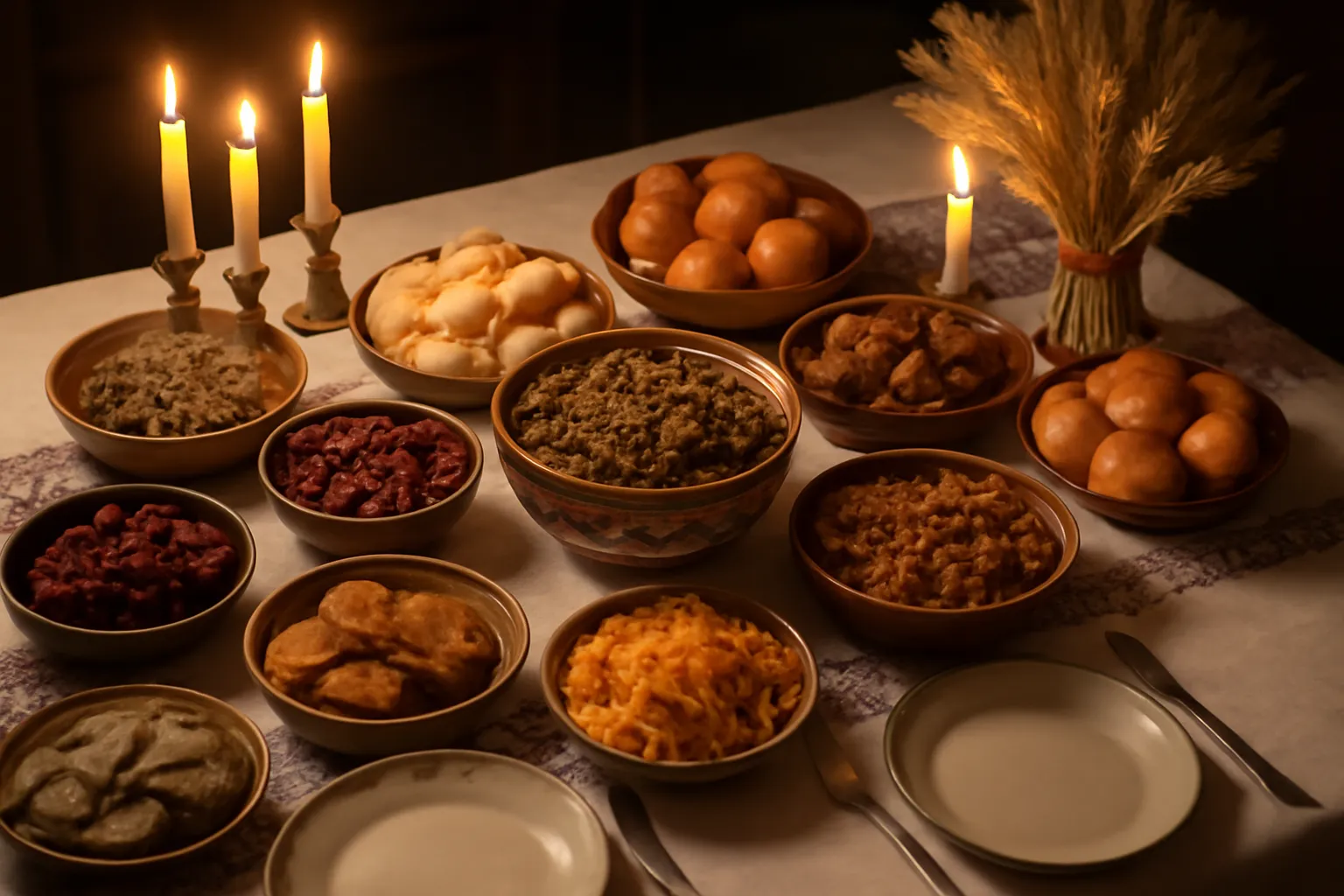
Velykden (literally “the Great Day”) is the most important religious holiday in the Ukrainian calendar. While Christmas traditions hold a special place in Ukrainian culture, Easter surpasses even Christmas in spiritual significance for Ukrainian Christians.
The celebration of Velykden blends centuries of Christian tradition with pre-Christian spring rituals, creating a uniquely Ukrainian expression of renewal, rebirth, and hope.
2. The Art of Pysanky
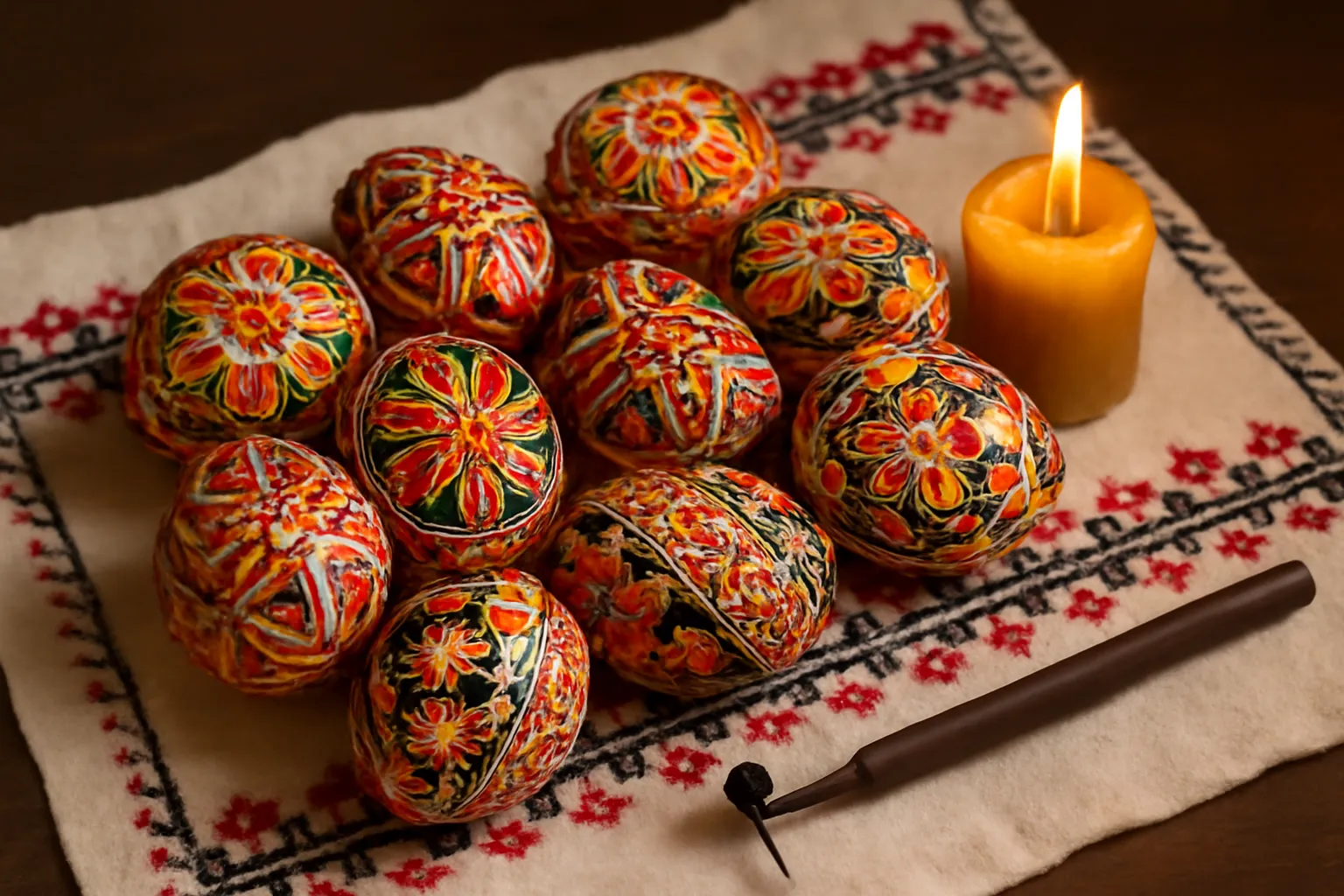
The most beloved Ukrainian Easter tradition is the creation of pysanky — elaborately decorated eggs that are recognized worldwide as masterpieces of folk art.
The Wax-Resist Technique
Pysanky are created using an ancient wax-resist dyeing method (batik technique):
- Begin with a raw egg — traditionally a chicken egg, though goose and duck eggs are also used
- Draw the design in pencil — lightly sketching the pattern guidelines
- Apply melted beeswax using a kistka (a small funnel-shaped stylus) to cover areas that should remain white
- Dip in the lightest dye — usually yellow
- Apply more wax to preserve the yellow areas
- Continue dyeing in progressively darker colors — orange, red, dark red, and finally black
- Melt the wax by holding the egg near a candle flame, revealing the multicolored design beneath
The entire process can take two to eight hours for a single egg, depending on the complexity of the design.
Symbolism of Pysanky Designs
Every element of a pysanka carries meaning:
Symbols:
- Sun and stars — life, growth, and God’s love
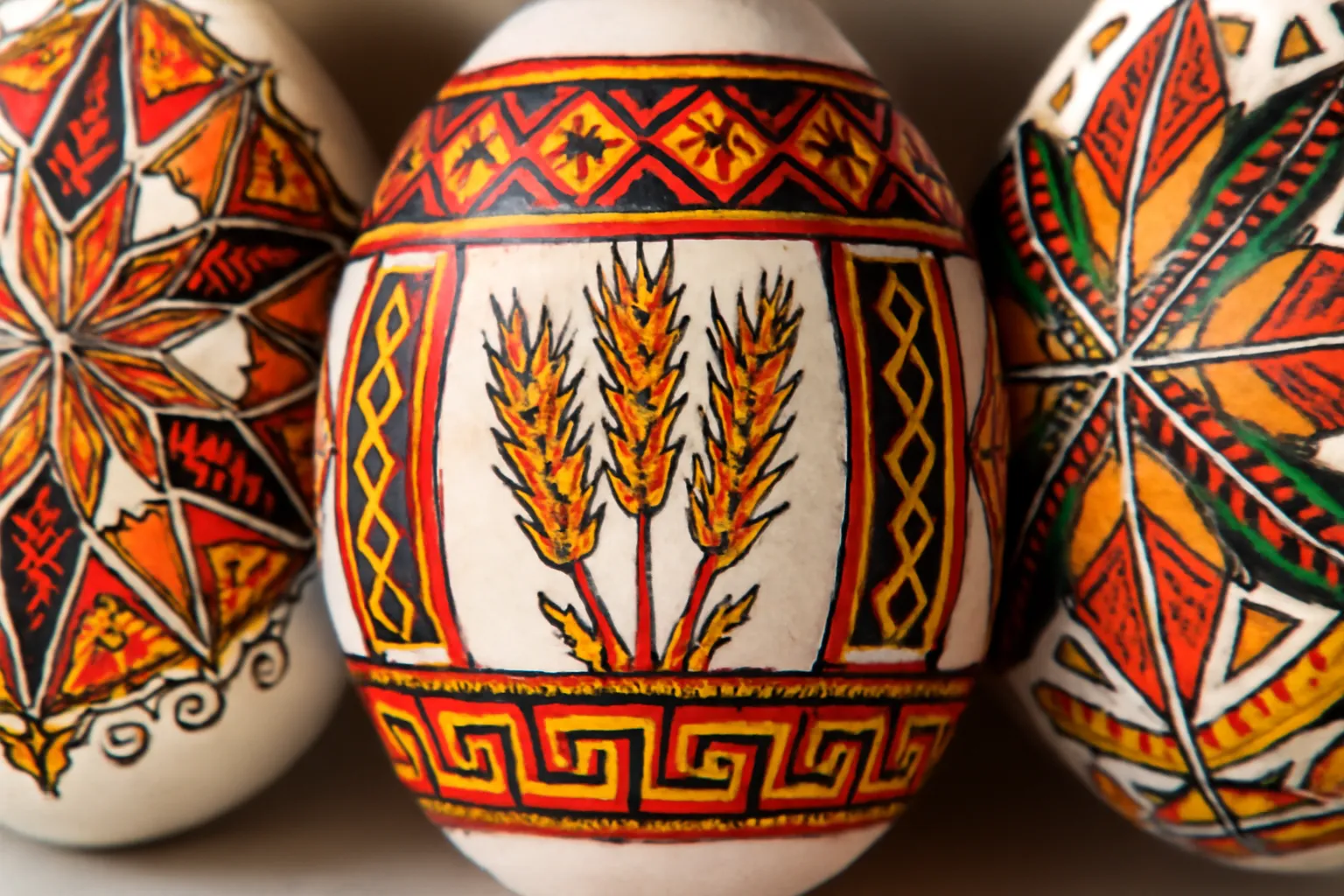
- Wheat and pine needles — bountiful harvest and eternal youth
- Deer and horses — wealth, prosperity, and strength
- Birds — spring, fertility, and the fulfillment of wishes
- Fish — Christianity and abundance
- Endless line (meander) — eternity and the cycle of life
- Triangles — the Holy Trinity, or fire, air, and water
- Crosses — faith and the four directions
Colors:
- Red — love, joy, and the blood of Christ
- Yellow — wisdom, light, and harvest
- Green — spring, renewal, and hope
- Blue — sky, health, and air
- Black — remembrance and eternity
- White — purity, birth, and innocence
Global Recognition of Pysanky
In recent decades, pysanky have gained recognition far beyond Ukrainian communities. The art form has been the subject of academic study, museum exhibitions, and international media coverage. UNESCO has considered Ukrainian pysanky traditions as part of Ukraine’s intangible cultural heritage, recognizing their significance as a living art form that bridges ancient symbolism and contemporary practice.
Across North America, pysanky workshops have become a popular way for people of all backgrounds to engage with Ukrainian culture. Community centres, churches, libraries, and universities host annual workshops, especially in the weeks leading up to Easter. Participants learn the wax-resist technique and discover the meaning behind traditional patterns. Many of these workshops are led by master pysanky artists who have spent decades perfecting their craft and passing it on to new generations. For a broader look at how Ukrainian traditions are kept alive in Canada, see our guide to Ukrainian folk traditions in Canada.
3. Famous Pysanky Collections
Several major museums house significant collections of pysanky, preserving examples that span centuries and represent every region of Ukraine:
- Royal Ontario Museum (Toronto) — holds one of North America’s finest collections of Ukrainian pysanky, with examples from every major region. The collection was largely built through donations from Ukrainian-Canadian families and includes both historical and contemporary pieces.
- The Ukrainian Museum (New York City) — maintains an extensive pysanky collection alongside other Ukrainian folk art. The museum regularly hosts exhibitions that showcase the diversity of regional styles and the evolution of the art form over time.
- Canadian Museum of History (Gatineau, Quebec) — features pysanky as part of its broader collection documenting the contributions of Ukrainian immigrants to Canadian life. The pieces here help tell the story of how Ukrainian settlers brought their traditions to a new land.
Private collectors and smaller regional museums across the prairies also hold important collections. Many Ukrainian churches in Canada display pysanky alongside other liturgical art, offering a living connection between the sacred tradition and everyday community life.
4. Pysanky in the Digital Age
The ancient art of pysanky has found a vibrant new audience through digital platforms. What was once passed down exclusively within families and communities is now accessible to anyone with an internet connection.
Online Tutorials and YouTube
YouTube has become one of the most important tools for learning pysanky. Channels dedicated to the art offer step-by-step tutorials for beginners as well as advanced techniques for experienced artists. Some popular channels have tens of thousands of subscribers, with viewers from countries that have no historical connection to Ukraine. These video tutorials allow learners to watch the delicate kistka work in close-up detail — something that can be difficult even in an in-person workshop.
Social Media Communities
Instagram and Facebook have fostered thriving pysanky communities where artists share their work, exchange tips, and organize virtual workshops. Hashtags like #pysanky and #pysanka connect thousands of artists worldwide, creating a global conversation about technique, symbolism, and innovation. Some contemporary artists push the boundaries of tradition with abstract designs, unusual color palettes, or eggs from exotic bird species like emus and ostriches.
Modern Tools
Technology has also influenced the tools of the craft. While traditional brass kistky remain popular, 3D-printed kistky have emerged as an affordable and customizable option for beginners. Electric kistky, which maintain a consistent wax temperature, have made the process more accessible to those who struggle with the traditional candle-heated method. Online shops now sell complete pysanky kits that include dyes, kistky, beeswax, and instruction booklets, making it easier than ever to start the craft at home.
5. The Easter Basket — Sviachene
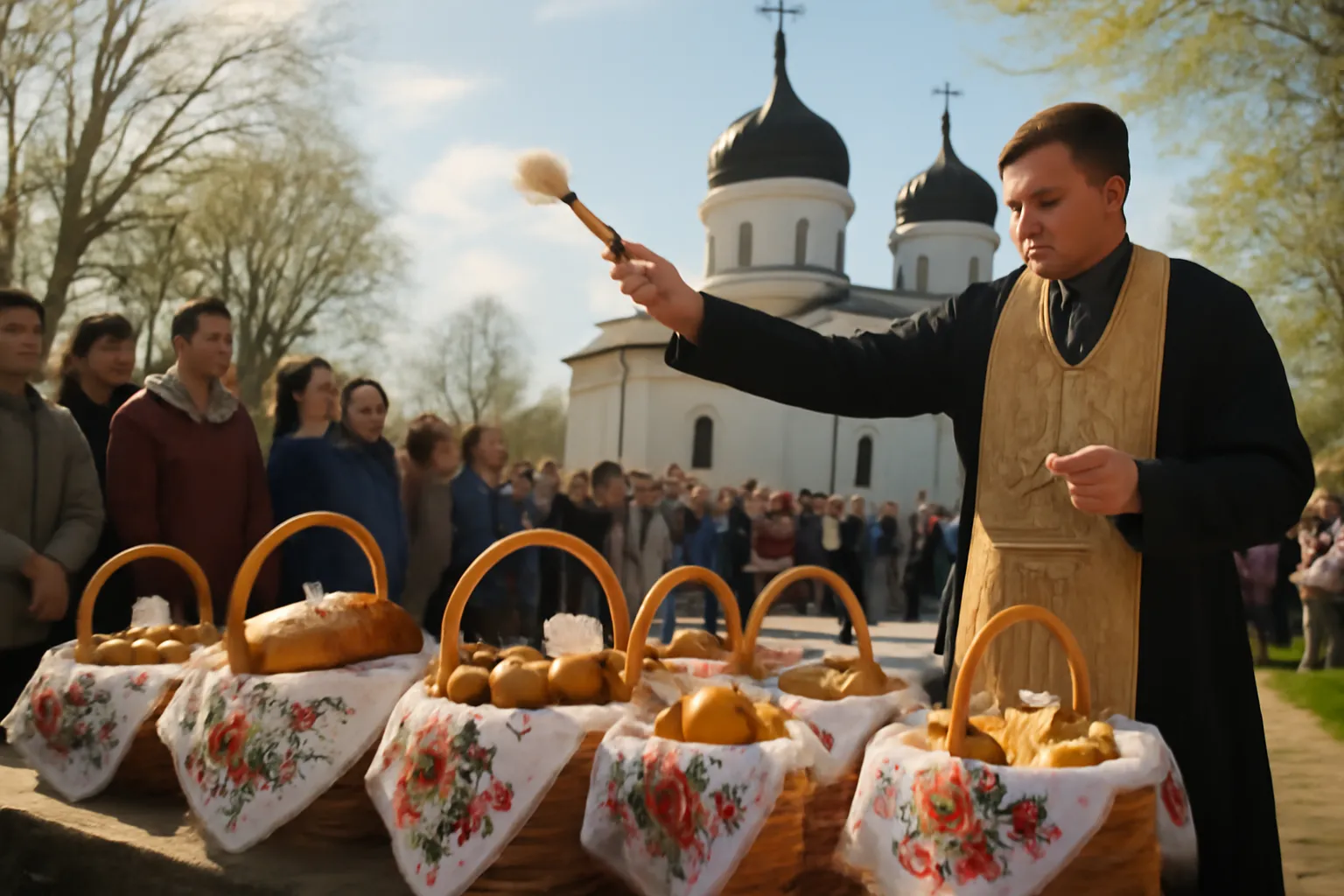
On Holy Saturday or Easter Sunday morning, Ukrainian families prepare a special basket called sviachene and bring it to church for the priest’s blessing. The basket, covered with an embroidered cloth (rushnyky), contains carefully chosen foods, each with symbolic meaning:
| Food | Symbolism |
|---|---|
| Paska (Easter bread) | The body of Christ; topped with a cross or braided dough |
| Kovbasa (sausage) | God’s generosity and abundance |
| Hard-boiled eggs | New life and resurrection |
| Butter (shaped as a lamb) | The Lamb of God |
| Khryn (horseradish) | The bitter sufferings of Christ |
| Sil (salt) | Purification and preservation |
| Syr (cheese) | The moderation of life |
| Shynka (ham) | Joy and abundance after the Lenten fast |
| Pysanky | Prayer and hope for the coming year |
The blessed food is brought home and served as the centerpiece of the Easter Sunday feast, breaking the long Lenten fast.
6. Paska — The Easter Bread
Paska is the most important baked item for Ukrainian Easter. This rich, sweet bread is made with eggs, butter, and milk — all ingredients forbidden during Lent, making paska a celebration of abundance.
Traditions Around Paska
- Paska is baked on Holy Thursday or Good Friday
- The household must be quiet and peaceful during baking, or the bread may fall
- The top is decorated with braided dough crosses, rosettes, or birds
- Some families make a special small paska for each child
- Leftover paska is never thrown away — it is crumbled for birds or returned to the earth
7. Holy Week Traditions
The week leading up to Velykden is filled with solemn observances:
Willow Sunday (Palm Sunday)
Since palm branches do not grow in Ukraine, pussy willow branches (verba) are used instead. The blessed branches are tapped gently on each family member with the words: “It is not I who strikes you, but the willow. Easter is in a week.”
Clean Thursday
On Thursday, the entire house is thoroughly cleaned and preparations begin for Easter. This is also the day for baking paska and preparing the Easter basket.
Good Friday
The most solemn day of the year. The plashchanytsia (burial cloth of Christ) is carried in procession around the church. Families fast strictly and attend lengthy church services.
Holy Saturday
Easter baskets are brought to church for blessing. In the evening, a vigil service begins that continues through midnight.
Easter Sunday — Velykden
At midnight, the church bells ring and the joyful proclamation echoes: “Khrystos Voskres!” (Christ is Risen!) to which the faithful respond “Voyistynu Voskres!” (He is Risen Indeed!).
After the morning liturgy, families return home for the great Easter feast, beginning with the blessed foods from the basket.
8. Easter Games and Customs
Ukrainian Easter includes beloved games and customs, especially for children:
Egg Tapping (Tsokання)
Two players each hold a hard-boiled egg and tap them together, point to point. The egg that cracks loses, and the winner keeps both eggs. Some champion eggs survive dozens of rounds!
Egg Rolling
Eggs are rolled down a small hill or inclined board. Players try to hit other eggs that are already at the bottom. If your egg hits another, you win it.
Hahilky — Spring Dances
Young women perform hahilky (spring ritual dances and songs) in the churchyard after Easter services. These ancient dances celebrate the arrival of spring and have roots in pre-Christian fertility rituals.
9. Regional Variations
Easter traditions vary across different regions of Ukraine:
- Galicia (Western Ukraine) — strongest emphasis on pysanky art, with distinctive geometric styles from the Hutsul mountain region
- Central Ukraine — elaborate hahilky dance traditions and distinctive paska styles
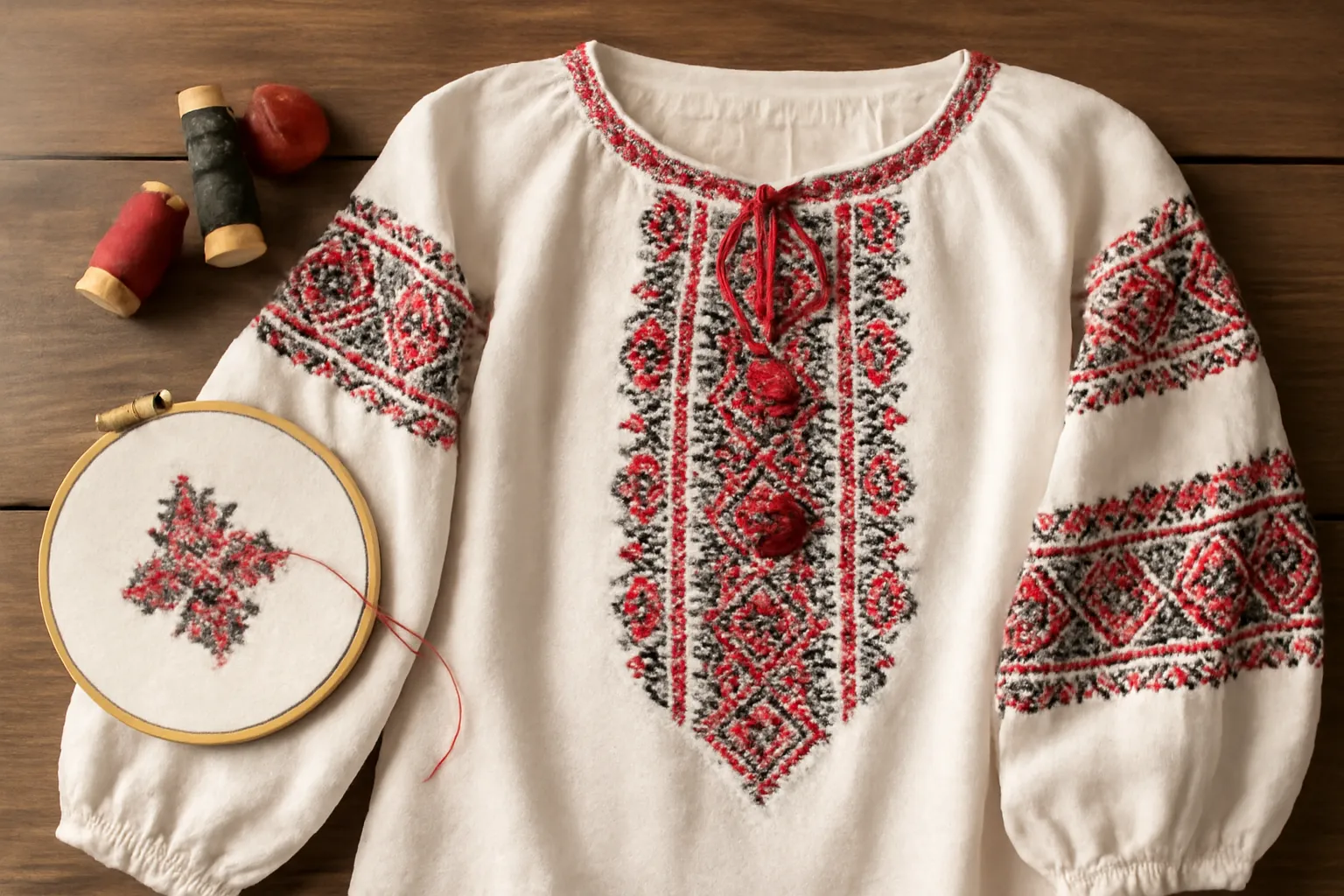
- Bukovina — unique pysanky color combinations and embroidery on Easter linens
- Volhynia — distinctive red-and-black pysanky designs
These regional traditions were carried to Canada by immigrants and can sometimes help genealogists identify the specific region their ancestors came from. The Ukrainian cultural community on PEI preserves several of these regional variations.
10. Keeping Traditions Alive in Canada
Ukrainian Easter traditions remain vibrant in Canadian communities. Pysanky workshops are held in community centres and churches across the country, and the art has gained appreciation far beyond the Ukrainian diaspora.
The Vegreville Pysanka in Alberta — a massive pysanka sculpture standing 31 feet tall — is one of the most recognized symbols of Ukrainian-Canadian heritage and has become a beloved roadside landmark.
For Ukrainians around the world, these Easter traditions provide a powerful connection to ancestral heritage. They offer a way to share the beauty and depth of Ukrainian culture with future generations, ensuring that the art, faith, and customs of Velykden continue to thrive far from the villages where they began. Those interested in how Ukrainian traditions are maintained internationally can explore this perspective on Franco-Ukrainian cultural exchanges.
Frequently Asked Questions
Pysanky are Ukrainian decorated Easter eggs created using a wax-resist dyeing technique. The artist applies melted beeswax to a raw egg using a stylus called a kistka, then dips the egg in progressively darker dye baths. Each layer of wax preserves the color beneath it, creating intricate geometric and symbolic patterns. The process can take several hours for a single egg.
Ukrainian Easter (Velykden) follows the Julian calendar, so it often falls on a different date than Western Easter. The date varies each year but is always calculated as the first Sunday after the first full moon following the spring equinox on the Julian calendar. It can fall between April and May.
The Easter basket (sviachene) includes paska (Easter bread), kovbasa (sausage), hard-boiled eggs, butter shaped into a lamb, horseradish, salt, cheese, ham, and pysanky. Each item carries symbolic meaning. The basket is covered with an embroidered cloth and taken to church on Saturday or Sunday morning to be blessed.
Pysanky symbols carry deep meaning: the sun represents life and growth, wheat symbolizes a bountiful harvest, deer represent wealth and prosperity, birds symbolize spring and fertility, and geometric patterns like the endless line represent eternity. Colors are also symbolic: red for love and joy, yellow for wisdom, green for spring and renewal, black for remembrance.
Beginners can create a simple pysanka with basic geometric designs in their first workshop session, typically two to three hours. However, mastering the art takes years of practice. Learning to control the kistka, apply even lines of wax, and manage the multi-step dyeing process requires patience and repetition. Most practitioners say they feel confident with intermediate designs after one to two seasons of regular practice, while truly intricate Hutsul-style pysanky may take five or more years to master.