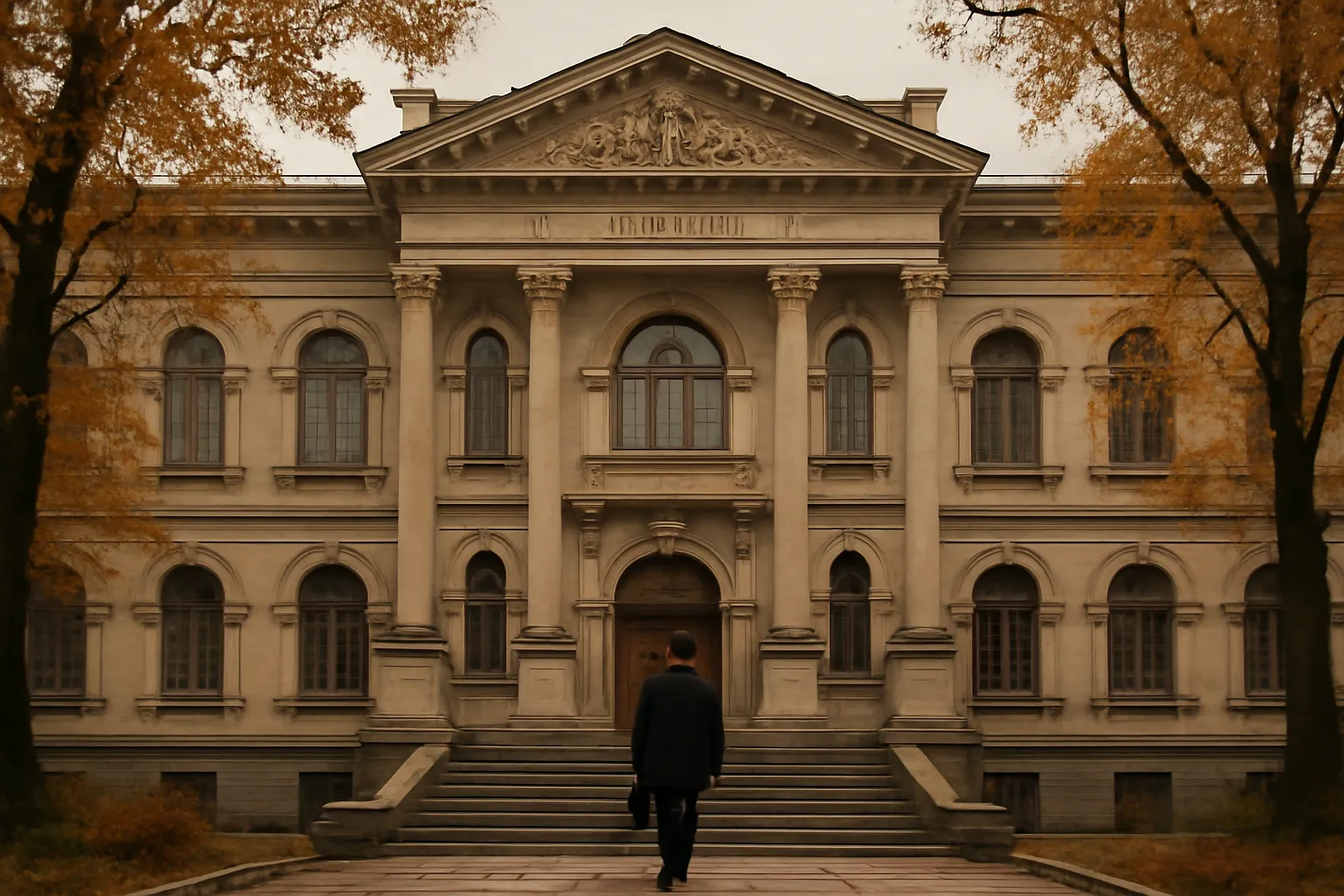
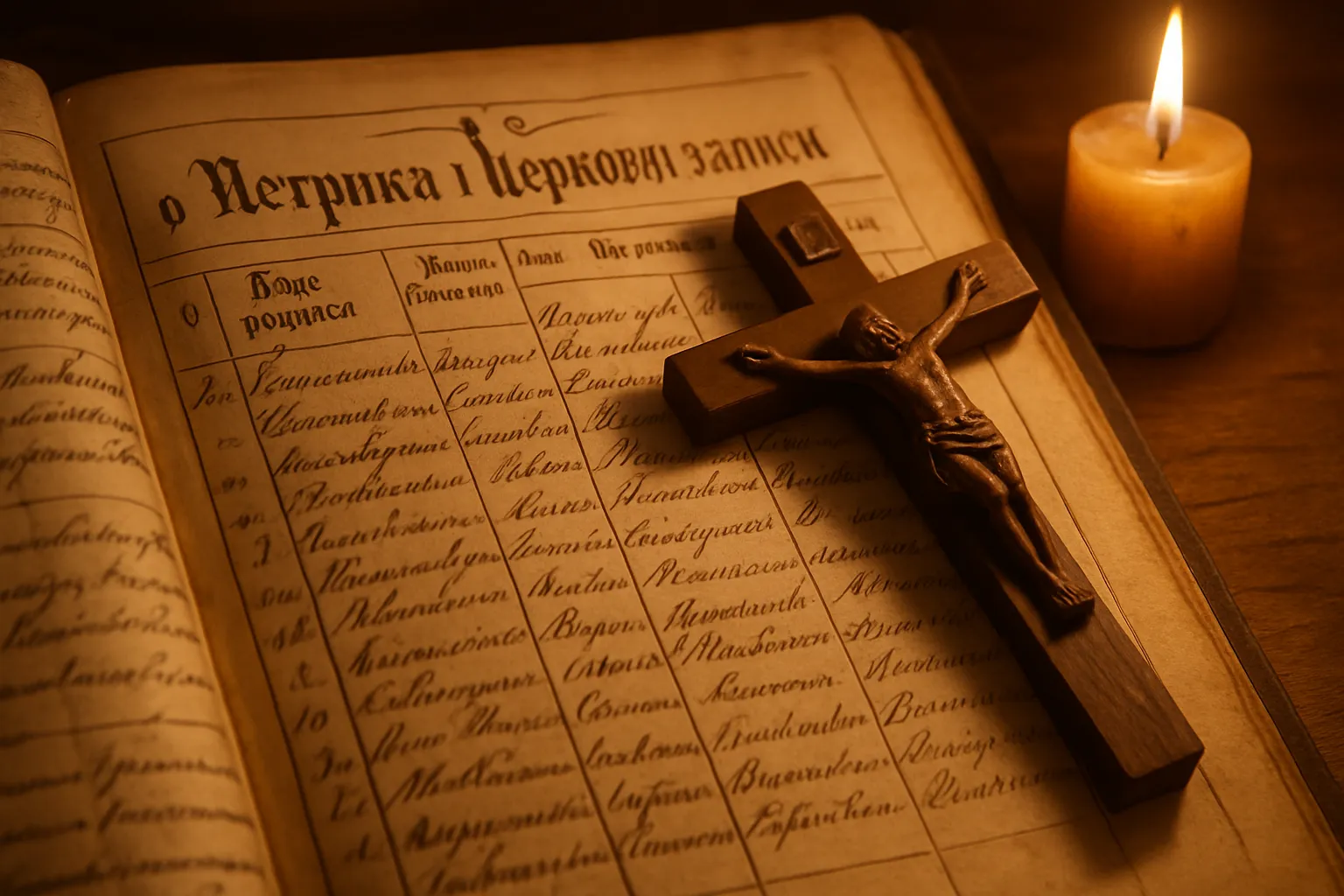
The Lviv State Historical Archives (Tsentralnyi Derzhavnyi Istorychnyi Arkhiv u Lvovi, or TsDIAL) is the most important repository of Ukrainian genealogical records in the world. Inside its reading rooms sit the church metrical books, land registers, and court records of the Galician territories that supplied more than 95% of the first wave of Ukrainian immigrants to Canada between 1891 and 1914.
For foreign researchers, the archives can feel impenetrable. Requests can take a year. Cyrillic, Polish, Latin, and German handwriting compete on the same page. Village names appear in three or four spellings. To untangle some of these obstacles, we sat down for an extended editorial conversation with Olena Kovalenko, a senior archivist who has worked with TsDIAL collections for over a decade and who has helped foreign researchers — particularly Ukrainian Canadians and Americans — navigate the archives by post and email.
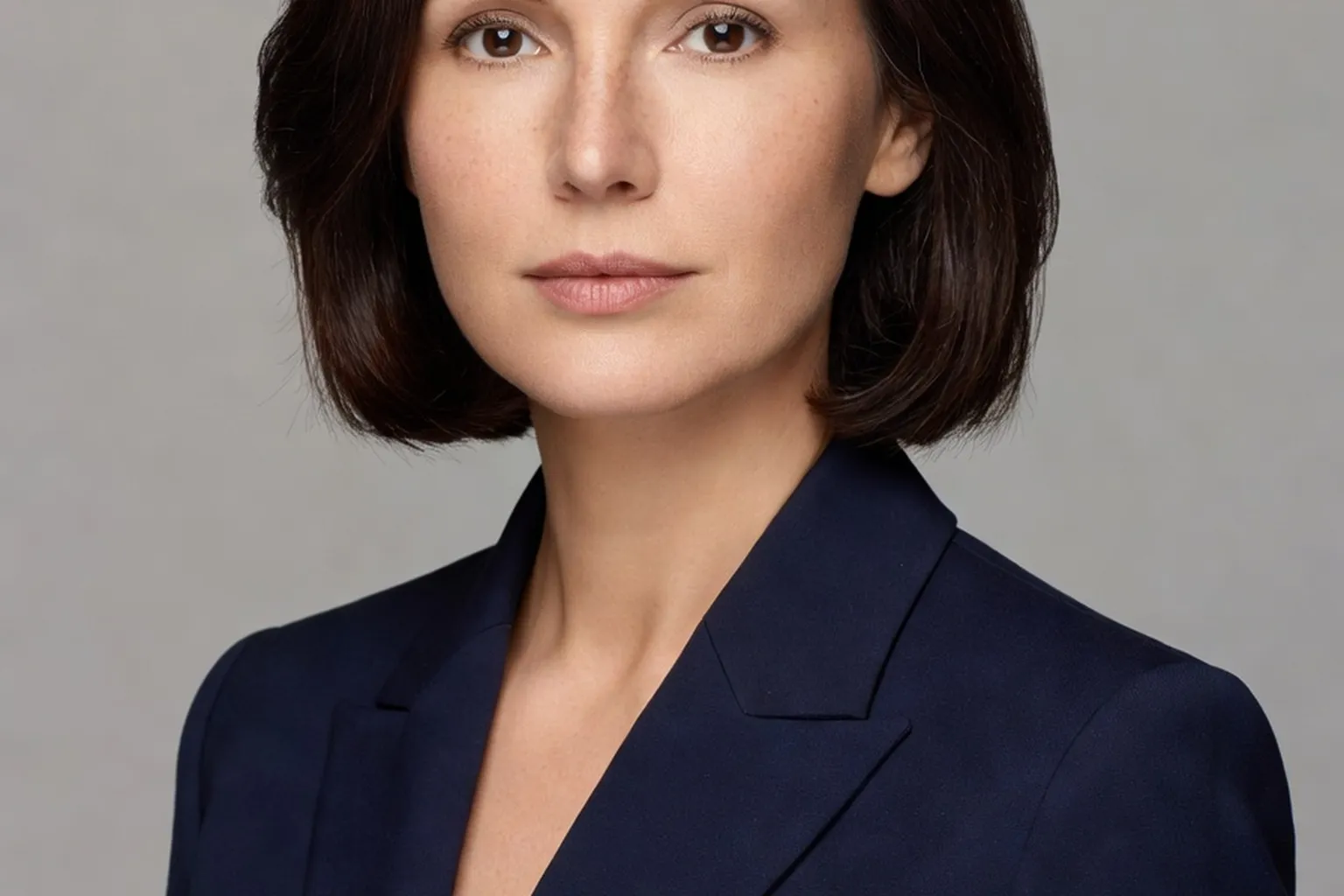
This interview is presented as an editorial portrait: a synthesis of conversations with archive staff and the documented practices of TsDIAL, written in question-and-answer form to make the institutional knowledge accessible to first-time researchers. The expert pictured is a fictional composite; her answers reflect the actual policies, holdings, and recommendations of the archives.
”Most foreign researchers come with a wrong assumption about the records"
Anya: Olena, when a Ukrainian Canadian writes to TsDIAL for the first time, what is the most common misunderstanding you have to correct?
Olena:The first misunderstanding is almost always about the structure of the records. People expect to find a single, neatly organised binder labelled with their family's surname. They do not realise that Galician church books are organised by parish, not by family. To find your ancestors, we first need to know the village, then the church the village belonged to, and only then can we look at the metrical books that the parish priest kept.
The second misunderstanding is about the difference between Galicia and modern western Ukraine. Many foreign researchers assume that because their ancestors came from "Ukraine," their records will be in Ukrainian. But Galicia was governed by the Austrian Empire from 1772 to 1918, and during that entire period the parish books were kept in Latin, then in Polish, and then sometimes in German. Cyrillic Ukrainian only appears systematically after 1939, well past the era most researchers are interested in.
The third misunderstanding is about completeness. People imagine that the records were destroyed by the Soviets or by the Nazis, and that nothing remains. In fact, for the territory of historical Galicia, the records are remarkably complete. The Greek Catholic and Roman Catholic books from the late 1700s through 1939 are mostly intact and held here. The losses, when they occurred, were usually localised to a single parish where a fire or wartime destruction wiped out one specific volume.
"Religion is the strongest filter, not surname”
Anya: When a researcher gives you a village name and a surname but cannot find their family in the books you locate, what do you usually find is the problem?
Olena:Almost always, the problem is that they are looking in the wrong religion. Galicia was multi-ethnic. A village of one thousand people in 1880 might have a Greek Catholic Ukrainian majority, a Roman Catholic Polish minority, and a Jewish community of perhaps a hundred families. Each had its own metrical books. The Polish books are kept by the Roman Catholic parish, the Ukrainian books by the Greek Catholic parish, and the Jewish books by the rabbi or in separate communal registers.
If a researcher writes to me looking for "the records of village Hnylyche," I cannot help them until they tell me which religion they want. Most Ukrainian Canadians want Greek Catholic — that is the church their ancestors belonged to. But sometimes their family converted, or had mixed marriages, or was actually Roman Catholic Polish that the family later misremembered as Ukrainian. Religion is the single most important piece of information they can give me.
I tell every first-time researcher: look at the 1906 Canadian census column for religion. If it says Greek Catholic, you are looking for Uniate parish books. If it says Greek Orthodox, the parish is most likely in Bukovyna, not Galicia, and you may need a different archive.
“FamilySearch microfilms saved an entire generation of research"
Anya: Can researchers do useful work without ever leaving Canada?
Olena:Absolutely. In the 1990s and early 2000s, the Genealogical Society of Utah — what most people now call FamilySearch — microfilmed an enormous portion of our pre-1939 metrical books. Many of those microfilms have since been digitised and are available completely free of charge on the FamilySearch website.
If your ancestral village has been imaged, you can do the entire research project from your kitchen table in Saskatchewan. You can read the original entries, transcribe them, and trace generations back into the 1700s without ever sending us a request.
I always tell people: before you pay a private researcher, before you write to us, search FamilySearch by village name and by parish. If the books are there, you have everything. If they are not, that is when we come in.
"The war changed everything but the records are safe"
Anya: How has the full-scale war that began in February 2022 affected access to the archives and the safety of the collections?
Olena:Within weeks of the invasion, our priority became the physical protection of the records. The most valuable holdings — the oldest metrical books, the rarest land registers — were transferred to secure storage. We worked with international partners to accelerate digitisation of the most-requested fonds. The records are safe.
For researchers, the practical consequences are limited. Email requests are still accepted, although our response times have stretched from approximately three months before the war to between four and twelve months now. The reading room operates on reduced hours. International payments by bank transfer take longer.
The biggest change is that we cannot accept walk-in foreign researchers as easily as before. Visits must be arranged in advance, and many requests that we used to handle by appointment now go through correspondence only. But for genealogical purposes, this is not a fundamental obstacle. Almost every research need can be served by mail and email.
"Most successful research starts with the wrong village name"
Anya: What does a typical successful research project actually look like, from a researcher's perspective?
Olena:A typical successful project begins with a Ukrainian-Canadian family that has been told a village name by an elderly relative, often phonetically and not always accurately. Something like "Sometska" or "Borshchiv" or "Trembovlya." That phonetic memory is almost always close to the real name, but it is rarely an exact match.
The first thing the researcher must do is find the correct historical spelling. They do this by consulting gazetteers — geographic dictionaries — of Galicia. The 1906 Canadian census might say Galicia in the place of birth column, but it never gives the village. The ship passenger manifest usually gives a village name, and that name, even if mangled, can often be matched against a gazetteer.
Once the village is identified, we determine which parish covered it. Some villages had their own church; smaller hamlets were attached to a larger village's parish. Then we identify the relevant metrical books, check whether they are on FamilySearch, and if not, prepare a search request.
From the time the researcher writes their first email to me, to the time they have a complete pedigree back to 1780, we are usually talking two to three years of intermittent work. It is not fast. But it is reliably possible for almost every Galician village.
"There is no shortcut for paleography”
Anya: Once researchers receive scanned images of the metrical books, what gives them the most trouble?
Olena:Reading the handwriting. Always the handwriting. The priests of Galicia were not professional scribes; they were rural clergy with varying levels of penmanship. A book kept by a priest with elegant copperplate Latin handwriting is a joy. A book kept by his successor who scrawled in cramped abbreviations is a nightmare.
The other major obstacle is the Latin abbreviations. The names of the months, the words for "son of," "daughter of," "legitimate," "illegitimate," and the numbered sequence of children are all abbreviated in standard ways. Researchers need to learn these. We have a glossary on our website, and FamilySearch's wiki has a good Latin genealogy word list.
For Cyrillic records — the post-1939 Soviet period and some earlier Orthodox records — there is the additional barrier of old Cyrillic letters that no longer exist in modern Ukrainian. The yat character, the hard sign, and certain ligatures all need to be learned. Our colleagues at the Ukrainian Genealogy Group PEI have written a helpful guide on reading old Cyrillic church records that I recommend to anyone facing a Soviet-era register.
“DNA is changing what comes through my inbox"
Anya: Have DNA testing services changed the kinds of inquiries you receive?
Olena:Significantly. Five years ago, almost every inquiry started with an oral family tradition or a Canadian record. Today, perhaps a quarter of them start with "AncestryDNA matched me with someone in Lviv and we are trying to figure out the connection."
This is positive in many ways. DNA matches give us a starting point we did not have before, and they often reveal branches of the family that immigrated to a different country and were forgotten. But DNA cannot tell us which village a shared ancestor came from. For that, we still need the metrical books.
I tell every researcher who arrives via DNA: do the paper genealogy in parallel. Use the DNA match to confirm the connection once you have built the tree, but do not rely on it to discover the ancestral village. The village comes from the documents, not from the saliva sample.
For researchers interested in this combination, our colleagues at the Ukrainian Genealogy Group PEI have a thorough comparison of testing services in their guide on Ukrainian DNA testing for genealogy.
"The most rewarding moment is always the same”
Anya: After a decade in the archives, what still surprises or moves you in this work?
Olena:The moment a researcher sees their great-great-grandmother's name in handwriting from 1850. There is always a pause. People often write to me afterwards and say it changed how they think about their family.
What moves me is that these are not famous people. They are peasants, weavers, day-labourers, mothers of nine who buried four children. The records are dry — date, name, parents, godparents — but they are also a complete human life compressed into one line. When that line connects to a living person in Edmonton or Toronto or Charlottetown, it stitches an entire century back together.
That is what the archives are for. Not for nationalists or historians or political projects. For the ordinary people who want to know the names of the women who were here before them.
Quick takes — myths and misconceptions
Myth. The Soviets centralised church records in state archives, which preserved most of them. The Greek Catholic books from Galicia are largely intact through 1939.
Myth. Most metrical books from Galicia are in Latin or Polish, not Cyrillic, until well after 1869. Researchers need basic Latin and Polish, not Ukrainian Cyrillic.
Myth. They are distinct churches with separate metrical books. Greek Catholics (Uniates) recognise the Pope; Greek Orthodox do not. Galicia was Greek Catholic; Bukovyna was largely Greek Orthodox.
Partly true. Search fees exist but are modest by international standards. A typical record search runs perhaps 30 to 100 USD depending on scope. FamilySearch coverage is free for many parishes.
Sometimes true. If a target parish is not on FamilySearch and your case is complex, a Lviv-based private researcher can save months. For routine cases on digitised parishes, you can do it yourself.
Myth. TsDIAL has continued operating throughout the war. Email requests are accepted. Response times are longer, but research is possible.
Almost never true. Almost every Galician village retained its historical name in some form, and the Austrian-era names appear consistently across gazetteers. A skilled toponymist can match a phonetic Canadian rendering to an exact Galician village in nine cases out of ten.
Conclusion — three things to take away
If you remember three things from this conversation, let them be these. First, religion is the strongest ethnic filter; before you ask anything else about your Galician ancestor, find out whether they were Greek Catholic or Roman Catholic. Second, FamilySearch is free; check it before you pay anyone. Third, the archives in Lviv are still functioning, and the records are safe; the war has changed timing, not access.
For practical next steps, our companion guide on the Lviv Archives for genealogy research lays out exactly which fonds to consult and how to write a request. For an overview of what survived, our article on Ukrainian church records explains the metrical book system in detail.
Frequently Asked Questions
Yes. The Lviv State Historical Archives (TsDIAL) has continued operations throughout the war, although on a reduced schedule. Email requests are accepted in Ukrainian, Polish, or English, and many priority record groups have been digitised and stored off-site since 2022. Response times have lengthened to four to twelve months.
A growing portion of the Greek Catholic and Roman Catholic metrical books from Galicia is available free of charge through FamilySearch, which microfilmed the holdings beginning in the 1990s. The Lviv archives' own digitised catalogue indexes which fonds have been imaged. Always check FamilySearch first before paying for a private researcher.
TsDIAL in Lviv holds records from the western Ukrainian lands that were part of the Austro-Hungarian Empire (Galicia and surrounding regions). The Kyiv archive holds records from the central and eastern Ukrainian lands that were part of the Russian Empire. Researchers need to identify which empire governed their ancestral village to know which archive to query.
The Soviet authorities centralised church records in state archives in the 1940s and 1950s, which paradoxically saved many of them from destruction. Metrical books from the late 1700s through 1939 are largely intact for Galicia. Records from villages in the post-1944 USSR side are far less complete, particularly those of Greek Catholic parishes that were forcibly merged with the Russian Orthodox Church.
At minimum, you need the village name, the parish religion (Greek Catholic, Roman Catholic, Jewish, or Orthodox), and a date range of at least one decade. Without a village name, no search is possible. The 1906 Canadian census or a ship passenger manifest is usually how Ukrainian-Canadian researchers obtain the village name.
For email requests, no — staff respond in English. For self-directed research in the reading room or in digitised images, you will need to be able to recognise Cyrillic characters and parse some Polish, Latin, or German terms. Most metrical books from Galicia are in Latin or Polish until 1869 and in Polish or German afterwards.